

Introduction
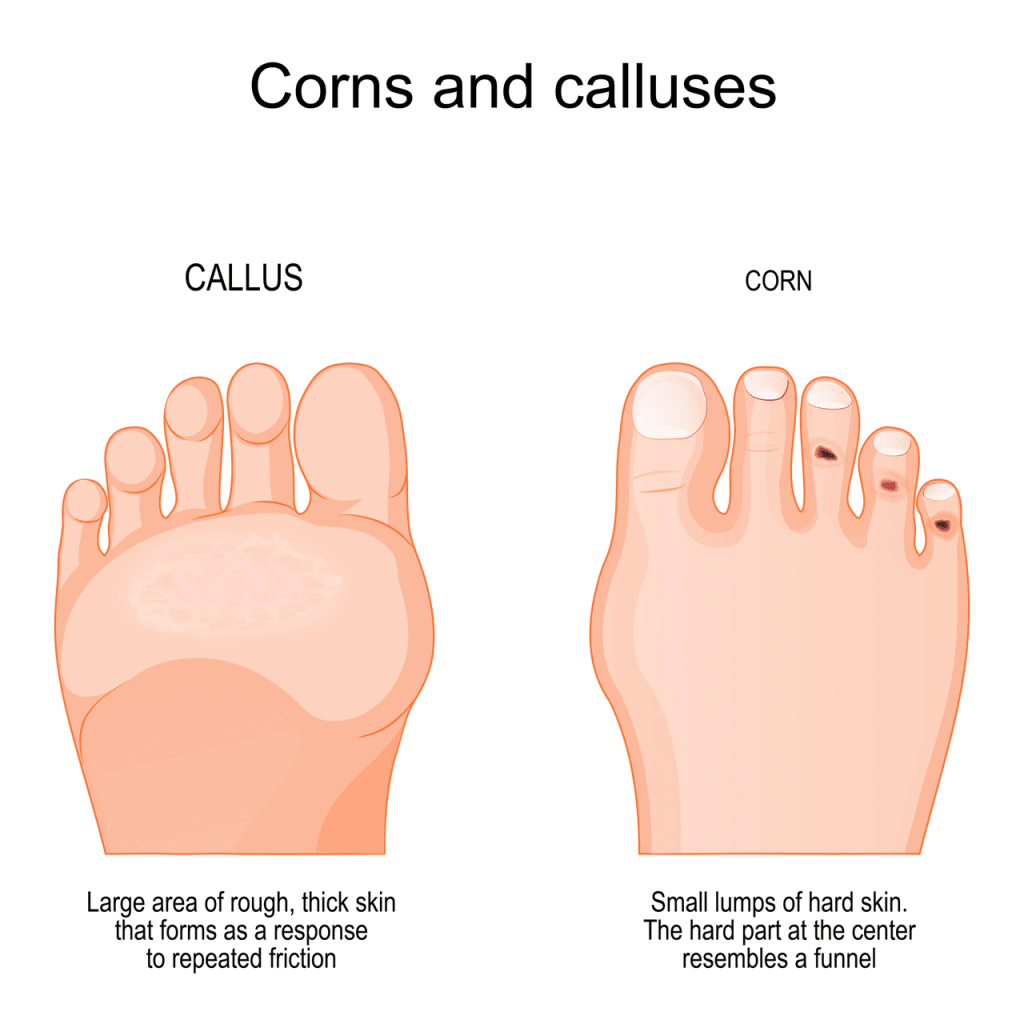
Many people have trouble with corns and calluses on their feet that cause pain. Soft corns and ingrown callus on the foot are two of the most common disorders that won’t go away. They can happen because of pressure, friction, or wearing the wrong shoes. Finding out what caused these foot problems is the first step to treating and preventing them. Moisture and friction between the toes can cause soft corns to grow. This makes the area soft and sometimes uncomfortable. An ingrown callus on foot can also happen when tough skin presses into the tissue underneath, which can cause irritation and even infection.
The Role of Shoes in Making Soft Corns and Calluses
Wearing shoes that don’t fit well is one of the main causes of soft corns and ingrown callus on the foot. When you wear tight shoes or high heels, you can put pressure on certain areas of your feet all the time. This can cause soft corns to form in the crevices between your toes. Also, excessively loose shoes might cause an ingrown callus on the foot since the skin thickens when it is stressed over and over again. Picking shoes that have enough room for your toes, a soft lining, and good support will make these painful foot problems far less likely.
How taking care of your feet, every day can keep corns from coming back.
To treat soft corn and keep calluses from growing on your feet, you need to take care of your feet on a regular basis. Warm water helps soften firm skin on your feet, which makes it simpler to gently file down thicker regions. Keeping the skin on your feet moist helps keep it flexible and stops fissures that might create calluses. Over-the-counter pads and treatments can help for a short time, but symptoms that last a long time or come back often need to be looked at by a doctor to avoid problems.
When to Get Professional Help for Foot Problems
If the area is still painful or exhibits signs of infection, soft corn treatment may need more than just home remedies. A podiatrist can give you specific care, such as safe ways to remove things and custom orthotics to ease pressure. An ingrown callus on your foot can also get worse if you don’t treat it. It may cause discomfort, inflammation, or even secondary infections. Early intervention helps ensure that these disorders don’t make it hard to move about or accomplish everyday things.
Making lifestyle choices that will help avoid foot problems in the future
Soft corns and ingrown callus on the foot might also come back because of how you live your life. Keeping a healthy weight takes stress off the feet, and not standing for lengthy periods of time or rubbing them together too much lowers the risk of new corns growing. The damp socks should be worn, the toenails trimmed in the right way, and your feet should be checked frequently to help you detect the first signs of irritation at an early stage to treat soft corns promptly.
Long-Term Plans for Keeping Your Feet Healthy
Preventing ingrown calluses and taking care of soft corns on your feet in the long run needs both prevention and professional assistance. Consistent appointments with a podiatrist can ensure that you watch the condition of your feet regularly, provide you with some treatment to correct the issue, and inform you about the type of shoes to wear. If you consistently take care of your feet, prevent high-risk regions, and deal with pressure points right away, you can greatly lower your chances of getting corns again.
Conclusion
Corns and calluses that come back can be uncomfortable and annoying, but knowing what causes them and taking steps to prevent them can help keep your feet healthy and pain-free. For long-term relief, you need to get professional help for your soft corn and keep an eye on any callus that grows on your foot. To enjoy total health and professional counseling, such websites as lmdpodiatry.com will allow you to maintain the health of the legs.